What Is an AI Software House? And Why Does It Matter for Business Operations?
An AI software house can change how quickly a business executes, uses its resources, and manages risk. Here's what that means for your business.
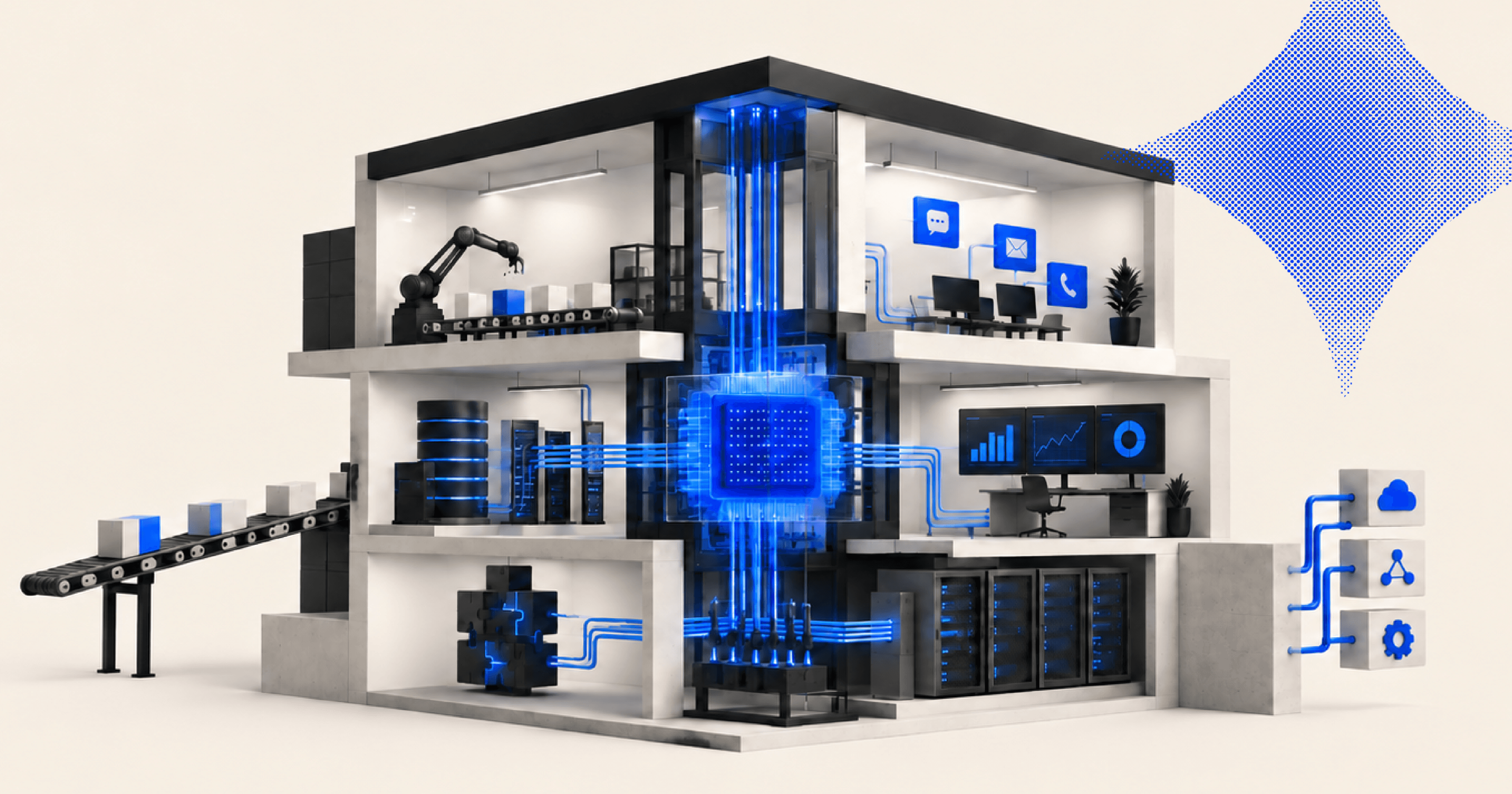
You've probably seen more and more software agencies calling themselves “AI software houses.” But with AI becoming part of almost every software project, what does that label actually mean? Is adding a chatbot to a website really enough?
Not quite. The real difference is in how the team uses AI throughout the software development process and how that can affect the way your business operates.
It's Not a Buzzword. It's a Workflow Change.
A real AI software house uses AI tools like code generation, automated testing, and AI-assisted code review as part of its everyday development process.
That can change how quickly a business turns ideas into working products. It can affect how fast marketing tests a new feature, how quickly operations can automate a manual process, and how soon finance can see a return on a digital investment.
This isn't just a hunch. A 2023 study by Microsoft and GitHub researchers found that developers using AI pair-programming tools completed a coding task 55% faster than those without them, while producing comparable or better code quality.
Read more: The Impact of AI on Developer Productivity: Evidence from GitHub Copilot
For a business, that kind of speed can add up. The same team may be able to support more projects at the same time without increasing costs at the same rate.
Where This Shows Up Across the Business

AI-driven software development doesn't just affect engineers. It can also change things that matter to the wider business.
Speed of execution
Ideas can move from concept to working product faster, giving the business more opportunities to test and validate ideas before committing a large budget.
Resource efficiency
When teams spend less time on repetitive, low-value work, they can take on more initiatives without increasing headcount at the same rate.
Operational reliability
AI-assisted code review can catch certain errors before release, helping reduce issues like outages and urgent fixes that can take teams away from planned work.
A related study from GitHub's research team looked at this from a different angle. Developers who used AI code completion reported feeling more productive, and this was also reflected in how often they accepted AI-generated suggestions.
Read more: Productivity Assessment of Neural Code Completion
So the productivity boost wasn't just something developers felt. It also showed up in how they actually used the tool.
The Operational Risk to Watch. Don't Let Speed Replace Judgment.
Here's the part that matters when you're thinking about AI for your business. AI tools can speed up execution, but they don't replace the judgment needed to keep software and operations working well over time.
Someone still needs to decide what's worth building for the long term, what's better as a quick test, when to fix or refactor something, and whether a system will continue to work as the business grows.
Stanford's 2024 AI Index Report noted that AI coding assistance is now widely used in professional software development, but the biggest productivity gains tend to come from well-defined, repetitive tasks rather than ambiguous work that requires more judgment.
Read more: The AI Index Report 2024
Put simply, AI can make a good team faster. It doesn't automatically make a mediocre team good.
When evaluating an AI software house, ask where AI fits into their process and which decisions are still made by their engineers. Not "Do you use AI?" but "Where exactly does AI fit into your process, and where do your senior engineers still make the important decisions?"
An AI software house worth paying attention to isn't the one with the flashiest AI pitch. It's the one that can show you exactly where AI helps speed up delivery and where human expertise still makes the important decisions.
Curious how this could apply to your own operations?
Book a Free Consultation
IF THIS DESCRIBED YOUR OPERATION, BRING US THE WORKFLOW.
A free thirty-minute call about the workflow that made you read this far. You leave with an honest answer on whether AI belongs in it, and no obligation either way.
BUILD THE SYSTEM
THE BUSINESS
ACTUALLY NEEDS.
Tell us where the business slows down, what the current tools cannot do, or what needs to be built from the ground up.